

AMD: Specialist Care
Reading and Windsor, Berkshire
Mr Kumar is a consultant retinal specialist providing wet AMD diagnosis and treatment for patients of Berkshire and beyond. As Lead Consultant for Macular Degeneration at Prince Charles Eye Unit and Senior Medical Retina Specialist at Royal Berkshire Hospital, he provides OCT-guided anti-VEGF treatment for patients with wet AMD.
Wet age-related macular degeneration (wet AMD) is a serious eye condition in which abnormal blood vessels grow under the macula and leak fluid or blood. If left untreated, this can lead to irreversible scarring of the macula and permanent loss of central vision, affecting reading, driving, and facial recognition. Vision loss from scarring cannot usually be restored. Hence the need for early diagnosis and treatment.
Anti-VEGF eye injections are the standard, effective treatment for wet AMD. They work by stopping abnormal vessel growth and leakage, reducing fluid, and helping to stabilise or improve vision. The success of treatment depends on timely and regular injections, guided by detailed retinal imaging such as OCT scans.
Mr. Kumar is the Lead Consultant for Wet Age-related Macular Degeneration (AMD) at the Windsor Eye Unit and also provides medical retina specialist care in Reading. As a retinal specialist with more than 35 years experience of which 18 years exclusively in managing AMD, he offers expert, consultant-led care tailored to each patient's needs.
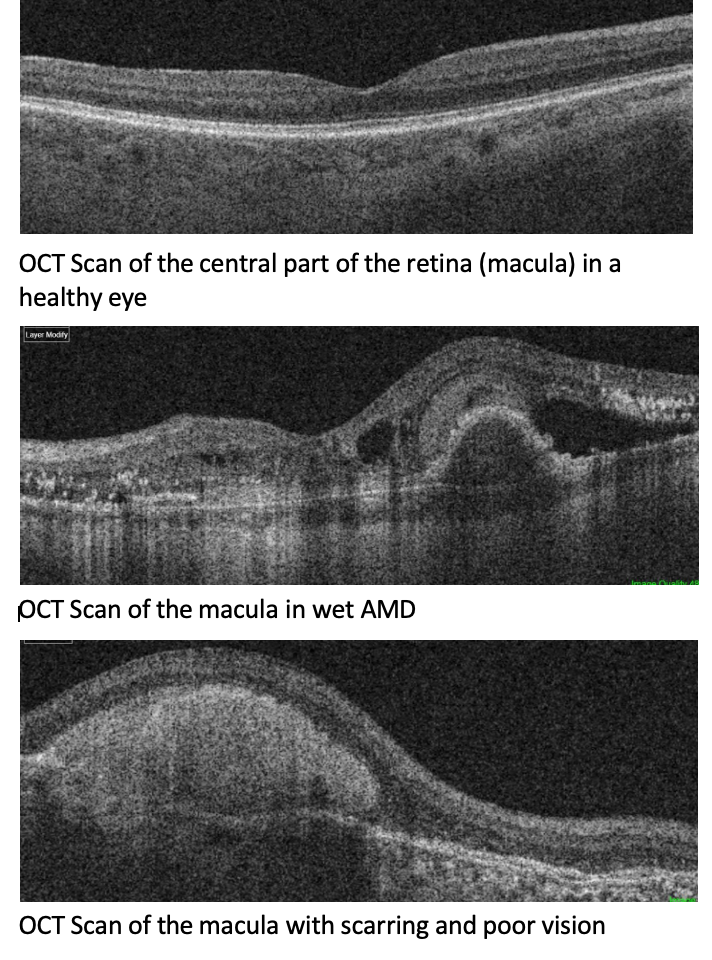
If you have been diagnosed with wet age-related macular degeneration (wet AMD), every week can matter. Clinical picture Clinical changes can occur over just a few days in some cases. Modern eye injections have transformed the outlook for this condition, allowing many patients to preserve their reading vision, maintain their independence and continue enjoying everyday life. The key is early diagnosis, careful monitoring and treatment delivered at the right time by an experienced retinal specialist.
As a Macular degeneration specialist in Reading and Windsor, Mr.Kumar understands the importance of early diagnosis and prompt treatment for your macular degeneration. Protecting your sight starts with Timely Treatment, and this is where Mr. Kumar comes in. As you can see below from before and after treatment scans, with prompt diagnosis and early initiation of treatment for wet macular degeneration his expert care, successful result can be achieved.

Wet AMD is an active disease requiring careful monitoring. Large clinical trials such as MARINA, ANCHOR, and VIEW has reinforced this concept as key in sight outcome in wet age-related macular degeneration. Early treatment reduces retinal leakage and fluid, helping to preserve or even improve vision. Delays may allow reactivation, increasing the risk of permanent vision loss. Some patients need frequent injections, while others can safely extend intervals. Determining the optimal regimen requires specialist assessment and experience.
The aim of treatment is to:
-
Preserve central vision for as long as possible
-
Prevent irreversible retinal damage
-
Detect recurrence before permanent vision loss
-
Minimise unnecessary injections while avoiding undertreatment
-
Maintain continuity of care with an experienced retinal specialist
As a retinal specialist providing private AMD care in Reading and Windsor, Mr.Kumar emphasises adhering to the recommended treatment schedule is one of the most important factors in achieving the best possible outcome.
-
If you have wet age-related macular degeneration (AMD), choosing not to have the recommended eye injections can have serious consequences. The abnormal blood vessels causing the disease can continue to leak and bleed, leading to permanent damage and scarring of the macula—the part of the eye responsible for sharp, central vision.
In his experience of running private eye injections clinics Reading and Windsor , once this damage occurs, the vision that has been lost often cannot be restored. Delaying or declining treatment increases the risk of permanent, irreversible loss of central vision, making everyday activities such as reading, driving, recognising faces, and seeing fine detail much more difficult.
Although eye injections can seem daunting, they are the most effective treatment for most people with wet AMD.
If you have been diagnosed with wet age-related macular degeneration (AMD), starting treatment promptly is essential to preserve your vision. Wet AMD can progress rapidly as abnormal blood vessels beneath the retina leak fluid or blood, causing irreversible damage to the macula, which is responsible for sharp, central vision.
If you are already receiving anti-VEGF injections, attending every scheduled treatment is equally important. Delaying or missing an injection can allow the disease to become active again, increasing the risk of further retinal damage and permanent vision loss.
With over 18 years of experience of being actively involved with AMD injection clinics in Berkshire, Mr. Kumar has seen that even short delays can lead to disease recurrence in some patients. Timely injections and regular follow-up appointments give you the best chance of maintaining your vision.
Successful treatment begins with an accurate diagnosis and careful monitoring.
Mr Kumar, as an AMD consultant in Reading and Windsor, uses advanced retinal imaging, including high-resolution OCT, OCT angiography, fundus autofluorescence and ultra-widefield imaging. These technologies enable early detection of subtle disease activity and key OCT biomarkers, such as intraretinal fluid, subretinal fluid and pigment epithelial detachment, allowing treatment decisions to be guided by precise retinal changes rather than symptoms alone. You can read further about OCT scans here.
As a senior NHS clinical lead, Mr Kumar also has access to the latest diagnostic and therapeutic advances, some of which are not yet widely available in private practice. He gets regular requests for private OCT eye scans. This ensures that every patient benefits from an individualised, evidence-based treatment plan designed to achieve the best possible visual outcomes.
In some cases, dye tests such as Fluorescein Angiogram and Indocyanine Green Angiogram may be needed. Mr Kumar will advise you on this.

If you've been told you need eye injections for wet age-related macular degeneration (AMD), it's natural to wonder whether treatment will continue for life. The reassuring news is that modern care is highly personalised and far more flexible than many patients expect.
Wet AMD is a chronic condition caused by abnormal blood vessels beneath the retina. Anti-VEGF injections (including Eylea, Ranibizumab(Lucentis), Vabysmo and Eylea HD) control the disease by stopping these vessels from leaking, helping to preserve central vision.
Most patients require long-term treatment and monitoring, but not at a fixed or lifelong frequency. Treatment usually begins with more frequent injections to bring the disease under control, followed by a personalised treat-and-extend approach, where intervals are safely increased as the eye remains stable. Some patients can eventually pause injections, although regular monitoring remains essential because the condition can reactivate.
Using advanced OCT-guided monitoring, Mr Kumar tailors treatment to each individual, providing the minimum effective number of injections needed to maintain long-term visual stability. His aim is always to preserve sight while reducing the burden of treatment whenever it is safe to do so.
Many patients are understandably anxious about eye injections, but the procedure is quick, carefully performed and usually much more comfortable than expected. Mr Kumar and his team prioritise patient comfort, safety and clear communication at every stage, ensuring every patient feels informed and supported throughout their treatment.
One of the most common concerns patients have is whether eye injections are painful.
The reassuring answer is that most patients are pleasantly surprised by how comfortable the procedure is.
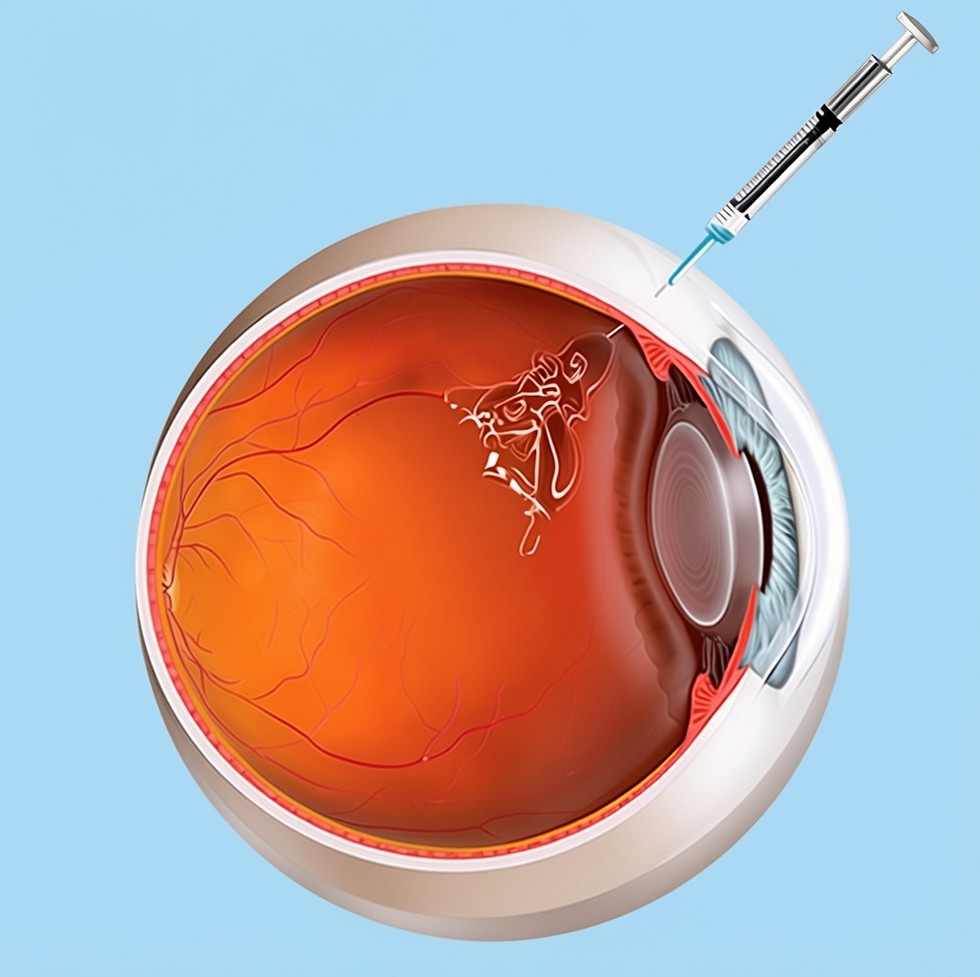
With his vast experience of dealing with AMD patients,Mr. Kumar ensures the eye is numbed thoroughly using local anaesthetic eye drops. The eye is then cleaned carefully with an antiseptic solution to minimise the risk of infection, and a small instrument is used to keep the eyelids comfortably open.
Although patients may notice a sensation of gentle pressure, the injection itself takes only a few seconds and is rarely described as painful. Many patients comment afterwards that the anticipation was far worse than the treatment itself. Mr. Kumar will always instil a soothing drop after the injection.
Each appointment is designed to ensure that treatment decisions are based on the current condition of the retina.
A typical visit includes:
-
Assessment of vision and any changes in symptoms.
-
High-resolution OCT retinal imaging.
-
Review of scan results and discussion of treatment.
-
Intravitreal injection, if required.
-
Planning of follow-up and future treatment intervals.
With Mr. Kumar, a senior Consultant Ophthalmologist in Berkshire, the injection itself takes only a few seconds, while the entire appointment typically lasts between 30 and 60 minutes.
-
Most patients experience only mild temporary symptoms following treatment. These may include:
-
Mild irritation or a gritty sensation
-
Watering of the eye
-
Slight redness at the injection site
-
Small floaters or tiny air bubbles that disappear naturally over the next day or two
Mr.Kumar is a reputed Wet AMD specialist Windsor and always instills special soothing drops immediately after eye injection to minimise the above possible symptoms. Normal daily activities can usually be resumed the following day, although swimming is best avoided for several days after treatment.
As with any medical procedure, there is a very small risk of complications. Infection inside the eye (endophthalmitis) is uncommon but requires urgent treatment. Patients are advised to seek immediate medical attention if they experience:
-
Increasing eye pain
-
Rapid deterioration in vision
-
Increasing redness
-
Significant sensitivity to light
-
A marked increase in floaters
Clear written aftercare instructions and emergency contact details are provided following every injection.
-
Mr Kumar is Lead Consultant for Macular Degeneration at Prince Charles Eye Unit, Windsor, and a Senior Medical Retinal Specialist at the Royal Berkshire Hospital. He has over 18 years’ experience in diagnosing and managing age-related macular degeneration and other retinal diseases and runs Eye Injection Clinics at Reading and Windsor.
He has treated thousands of patients, managing both routine and highly complex cases, with an evidence-based, individualised approach tailored to each patient’s condition. He remains actively engaged in advances in treatment of AMD, including dry AMD, and was involved in the AGAIN study investigating intravitreal complement inhibitor therapy for geographic atrophy. He also takes keen interest in latest developments in Gene Therapy and Valeda Photobiomodulation.
Mr Kumar also receives regular referrals from consultant ophthalmologists in both NHS and private practice for specialist opinion and long-term management of macular disease, reflecting the confidence placed in his clinical expertise and judgement.
His treatment philosophy can be summed as:
-
Every patient deserves the right treatment, at the right time, for the right duration."
-
The goal is not simply to give fewer injections. The goal is to preserve vision with the fewest injections that can safely achieve that outcome."
-
Every patient should receive as few injections as possible—but as many as necessary—to achieve the best possible long-term visual outcome."

To book a consultation with Mr Kumar, please visit our 'Contact Us' page.
-
The NHS provides outstanding care for patients with macular degeneration, and retinal services continue to treat very large numbers of patients every day. However, increasing demand on ophthalmology services means that appointments and treatment schedules can occasionally become more difficult to maintain exactly as planned.
For a condition in which even relatively short delays may affect visual outcomes, some patients rightly choose private care to ensure rapid assessment, continuity of follow-up and needed treatment.
Whether patients wish to transfer their care completely, obtain a second opinion, need urgent retina appointment or simply complement their NHS treatment with this Macular degeneration specialist in Thames Valley, Mr Kumar offers prompt access to expert assessment, advanced retinal imaging and intravitreal injections whenever clinically indicated. He currently has specialist retinal and injection clinics running at following hospitals in Reading:Circle Hospital , Spire Dunedin and Berkshire Independent ,as well as Princess Margaret Hospital in Windsor. He leads busy clinics at the Royal Berkshire Hospital and King Edward VII Hospital in Windsor. This allows for coverage of nearby communities, as well as surrounding areas of Berkshire, Buckinghamshire, Oxfordshire and Surrey.
Anti-VEGF therapy has transformed outcomes in wet age-related macular degeneration, with ongoing advances now allowing many patients to consider longer intervals between injections while maintaining good disease control.
Treatment is individualised. Mr Kumar provides specialist wet AMD treatment for patients in Reading, Windsor and surrounding Berkshire areas and offers modern licensed anti-VEGF options, including longer-acting therapies where appropriate, guided by retinal scans, visual function, and treatment response rather than a one-size-fits-all approach.
Where suitable, a Treat-and-Extend strategy is used to maintain vision, prevent recurrence and retinal damage, and reduce clinic visits and injections when safe to do so.
However, not all patients can be extended, and some require more frequent treatment. Regular monitoring with advanced imaging ensures injection intervals are adjusted safely to each patient’s needs.
By combining extensive clinical experience with access to the up to date diagnostic technology and modern therapeutic options, Mr Kumar strives to provide treatment that is both highly effective and as convenient as possible, while always placing the preservation of vision at the centre of every management decision.

Age-related macular degeneration is one of the most rapidly advancing areas in ophthalmology, with ongoing improvements in imaging, evidence, and treatment options.
Mr Kumar follows an evidence-based, personalised approach, ensuring all recommendations reflect the latest high-quality research and international best practice.
As a Retina specialist Windsor and Reading, he contributes to the development of macular degeneration pathways and guidelines, working within NICE frameworks and engaging with NHS England and Integrated Care Board (ICB) guidance to support consistent, high-quality sight-saving care across the region.As a senior retinal specialist he also contributes to National Ophthalmology Database AMD audit.
He has extensive experience applying findings from key clinical trials such as TENAYA/LUCERNE, PULSAR and PHOTON, helping ensure patients benefit from the most up-to-date treatment strategies.
He also regularly attends national and international retinal meetings and conferences, maintaining active engagement with emerging therapies, clinical trials, and advances in imaging to deliver cutting-edge care.
A key advantage of choosing Mr Kumar is seamless continuity of care across both NHS and private practice.
He is a Lead Consultant for macular degeneration at King Edward VII Hospital (Windsor) and a Medical Retina Specialist at Royal Berkshire Hospital (Reading), he has been trusted by patients as leading Retinal Specialist in Berkshire to provide private retinal and AMD care in Reading and Windsor. This dual role gives him a detailed understanding of both systems, ensuring consistent, expert management whichever pathway a patient follows.
Patients may choose to start privately for rapid access to assessment and treatment, continue NHS care, or move between the two as circumstances change. When care is overseen by the same specialist, there is no need to repeat assessments or re-establish clinical history, allowing treatment to continue smoothly and without disruption.
This continuity is especially important in chronic conditions such as wet age-related macular degeneration, where decisions rely on long-term patterns as well as current scans.
From first consultation through ongoing treatment, patients remain under the care of the same experienced macular degeneration specialist, ensuring consistency, convenience, and continuity throughout their journey.s particularly valuable in a chronic condition such as wet age-related macular degeneration, where treatment decisions are based not only on the current retinal scan but also on a detailed understanding of how the disease has behaved over many months or years.
Mr Kumar is recognised and accredited by all major private medical insurance providers in the United Kingdom.
Patients with private medical insurance are encouraged to check their level of cover with their insurer prior to their appointment. Mr Kumar's team is happy to assist with any queries regarding insurance authorisation, self-funding options or transfer of care between private and NHS services.
Lead Consultant for Macular Degeneration at the local NHS Eye Unit
Over 18 years' specialist experience in retinal diseases
Trusted by consultant colleagues, with referrals from ophthalmologists across both NHS and private practice
Access to the latest diagnostic imaging and the newest treatments for wet AMD
Seamless continuity of care across NHS and private practice
Personalised treatment plans based on the latest clinical evidence
Accredited by all major UK private medical insurers
Actively involved in research regarding new AMD treatments. Most recently, he was involved in the AGAIN study, which examined the possibility of intravitreal complement inhibitor injections for patients with geographic atrophy (a type of advanced dry AMD)
Rapid access to expert assessment and treatment when preserving vision is time-critical
Yes, it is usually possible to move between NHS and private eye care, including treatment for macular degeneration. However, the process depends on your individual situation and the treatment you are receiving.
If you are currently under NHS care and wish to switch to private treatment with Mr. Kumar, you can do so at any time by booking a private consultation. Your care will then be managed privately going forward and will be looked after personally by Mr. Kumar himself. Many patients do so in order to be under the care of this Private Wet AMD Specialist in Reading and Windsor.
If you are receiving private treatment and want to return to NHS care, you can also do this, and Mr. Kumar can arrange this.
It is important to note that while the NHS and private systems can work alongside each other, they are separate pathways, and treatment plans may differ. For conditions such as macular degeneration, continuity of care is especially important, so any transition should be carefully discussed with your eye specialist.
Whether you have recently been diagnosed, are concerned about new symptoms, would like a second opinion, or are seeking continuity of treatment between NHS and private care, Mr Kumar offers rapid access to specialist retinal assessment using the latest diagnostic technology and evidence-based treatments.
-
When it comes to wet macular degeneration, waiting can mean losing vision that cannot be recovered
-
Early assessment. Timely treatment. Expert care.
-
Because preserving sight cannot wait .
As a senior specialist in wet age-related macular degeneration (AMD), Mr. Kumar has compiled answers to some of the most common questions he receives from patients. These expert insights are provided in the FAQ section below.
-